A Brighter Summer Day

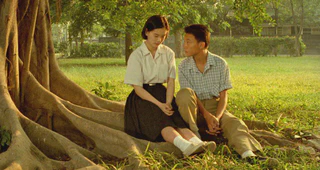 A Brighter Summer Day
It’s been six months since I last wrote a blog post. Somehow, it’s another Edward Yang film that makes me want to open my laptop and write again.
The film ends quietly, much as it begins, with a radio broadcast announcing the students admitted to National Taiwan University’s College of Liberal Arts. I wonder whether any of the names are real. Hearing a string of seemingly random names through the radio static, it’s hard not to ask: what does any of this mean? Just as Elvis thinks of Taiwan as some obscure island, these students, admitted to the country’s most prestigious university and convinced that their lives are about to change, might mean nothing at all to someone else.
The film leaves me with a feeling of something vast and small at once. People from every corner of mainland China pour into postwar Taiwan. A society adrift breeds teenage terrorists armed with guns and clubs, while the White Terror keeps ordinary families on edge. Yet the film is also just about a bunch of kids under sixteen with nowhere to put their restless youth. In the end, Xiao Si is sent to prison like the tape tossed into the trash, abruptly cutting off whatever grief or pity we might feel for him.
Both films use plenty of long takes and static shots, but unlike the gentleness of Yi Yi, the camera in A Brighter Summer Day feels like an indifferent observer. It often watches from behind a door or somewhere far away, as though allowing us to look objectively at all the anger and agitation. Even during the brutal revenge attack at the 217 pool hall, we can only see by the light of Xiao Si’s flashlight, looking straight at one small corner of the violence. There are no close-ups of terrified faces, no fights to set our blood racing. Only quiet death.
Xiao Si’s transformation from a good student into someone consumed by violence is the film’s central thread. In a sense, though, he never changes. From beginning to end, he remains the same stubborn, proud idealist. He simply trades his faith in knowledge for faith in violence, mistaking his own wishful thinking for pure love. It reminded me of Robert De Niro’s Madonna–whore complex in Taxi Driver.
He is pushed around by his times: his father is persecuted, he is bullied at school, and Xiao Ming toys with his feelings. But he hasn’t been abandoned. He has close friends like Cat and Ma, and he is especially loved by his father, his eldest sister, his older brother, and his other older sister. He is trapped in an illusion shaped by both himself and the world around him. He believes violence can solve every problem. He believes that loving Xiao Ming sincerely enough will make her change. But the bubble has to burst eventually. What chilled me most was that, even at the end, he refused to take off his blood-soaked clothes—clothes stained with the blood of the person he loved.
In fact, many of the film’s characters live inside illusions. Xiao Si’s father believes Wang Gou is a friend he can trust. Honey imagines himself as Pierre in War and Peace, facing Napoleon alone. The characters who don’t live inside illusions are Sly and Wang Gou—you can tell how “fond” the director is of them just from their names.
Yang’s tenderness toward idealists comes when the tape Cat sends to Elvis receives a reply. Yet that tenderness lasts less than a minute before it is thrown into the trash. Even at the end, I couldn’t tell how the director felt about people like these, or about the times they lived in. Perhaps, like the names that briefly pass through the radio, they simply disappear: here for a moment, then gone, hardly worth mentioning.
